



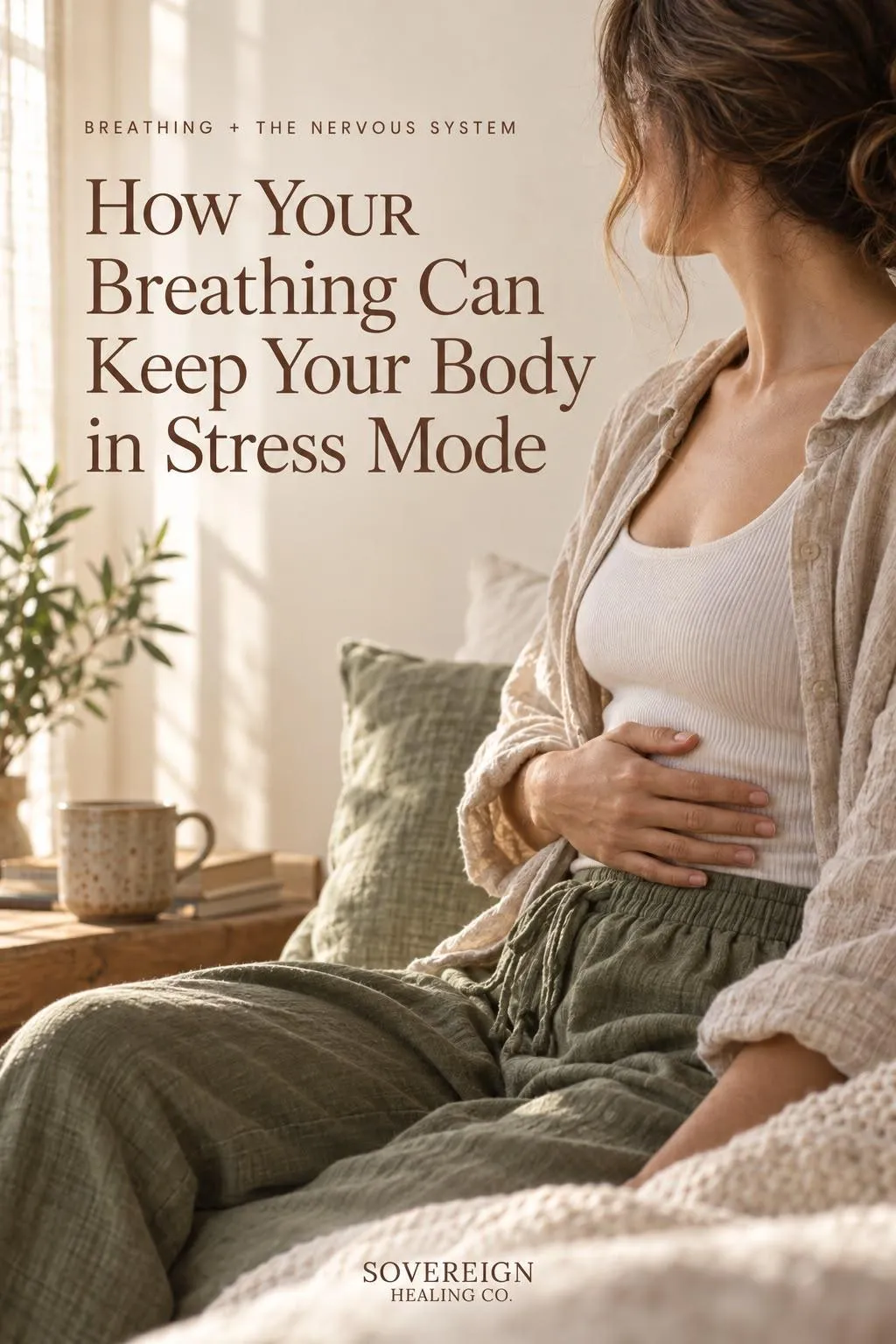
How Your Breathing Can Keep Your Body in Stress Mode
The connection between shallow breathing fight or flight and intentional calm
Have you ever reached the end of a busy day and realized you have barely taken a full breath? Your shoulders are lifted, your jaw is tight, and your breathing has stayed high in your chest while you moved from one thing to the next.
Breathing is automatic, but the way we breathe can change with stress. When life feels rushed or overwhelming, our breaths may become quicker and shallower. That pattern can keep the body feeling alert even after the stressful moment has passed.
The good news is that breathing is also something we can influence on purpose. A few slow, comfortable breaths will not solve every source of stress, but they can give the nervous system a clear opportunity to slow down.
When stress changes the way you breathe
Fight or flight is the body's built-in response to a possible threat. The sympathetic branch of the nervous system prepares us to act by increasing alertness and changing functions such as heart rate and breathing. This response is useful when we truly need it.
The problem is that the body can respond to a packed schedule, constant notifications, conflict, poor sleep, or mental overload as if it needs to stay ready. You may not feel panicked. You may simply feel wired, tense, tired, distracted, or unable to fully settle.
Shallow breathing does not mean you are doing something wrong, and it is not proof that your nervous system is damaged. It can simply be one sign that your body has been spending a lot of time in an activated state.
Your diaphragm does more than move air
The diaphragm is the main muscle used for breathing. When you inhale, it contracts and moves downward, creating more room for the lungs to expand. As this happens, the belly and lower ribs can gently widen.
When breathing stays mostly in the upper chest, the diaphragm may not move through that same comfortable range. Intentionally allowing the lower ribs and belly to expand can help slow the breath without forcing it.
You do not need to take the biggest breath possible. In fact, an exaggerated inhale can feel uncomfortable or make some people lightheaded. The goal is a quiet, easy breath that feels spacious rather than strained.
How slow breathing supports rest and digest
The parasympathetic nervous system supports what we often call rest-and-digest mode. The vagus nerve is one of its major pathways, carrying signals between the brain and organs including the heart, lungs, and digestive tract.
Research on slow-paced and diaphragmatic breathing has found changes associated with parasympathetic activity, including increased heart rate variability in some studies. Other research has found improvements in perceived stress, negative mood, or anxiety after structured breathing practice. The evidence is promising, but breathing is a support tool rather than a treatment for every stress-related symptom.
This is why the breath can feel like a bridge between what happens automatically and what we can influence intentionally. We cannot order the nervous system to calm down, but we can create conditions that make settling more possible.
Why a slower exhale can feel calming
Your heart rate naturally shifts across the breathing cycle. For many people, slowing the overall breath and letting the exhale last slightly longer than the inhale feels calming. It gives the body time to release some of the bracing that builds during a busy day.
Longer does not mean forceful. If a six-count exhale feels uncomfortable, shorten it. A relaxed four-count inhale and five-count exhale can be enough. Comfort matters more than reaching a perfect number.
Aromatherapy as a reminder to pause
Scent can become a practical cue for a habit. When you pair a familiar aroma with slow breathing, it can remind you to stop rushing for a moment and notice what your body is doing.
That is how I like to use the Deep Breathe aromatherapy roll-on. I apply it to my pulse points, pause, and take a few slower breaths. The roll-on is not doing the breathing for me. It simply gives me a sensory reminder to come back to the moment.
A simple three breath reset
Apply your roll-on to your wrists or neck as directed, keeping it away from your eyes.
Place one hand over your belly or lower ribs.
Inhale gently through your nose and notice your hand move as your belly and ribs expand.
Exhale slowly without pushing. Let the exhale be a little longer than the inhale if that feels comfortable.
Repeat for three breaths, or continue for a few minutes when you have more time.
Try it before answering another notification, while sitting in the school pickup line, after putting the kids to bed, or whenever you notice your shoulders creeping toward your ears. The practice works best when it fits into real life.
You do not have to calm down perfectly
Some days, three breaths will help you feel noticeably softer. Other days, you may still feel stressed. The point is not to force your body into calm or judge yourself when it does not happen quickly.
The practice is simply a way of checking in. You notice the breath, give the diaphragm room to move, and offer the body a moment that feels less rushed. Repeated over time, those small pauses can become easier to reach for when you need them.
If breathing exercises make you dizzy, short of breath, panicky, or uncomfortable, stop and return to your normal breathing. New or severe breathing difficulty, chest pain, fainting, or other concerning symptoms require medical care.
A final reminder
You do not need a long routine to support your nervous system. Sometimes the most realistic place to begin is one intentional moment: soften your shoulders, feel your belly expand, and let your next exhale take its time.
Educational note
This information is provided for educational purposes and is not intended to diagnose, treat, cure, or prevent any disease. Breathing practices and aromatherapy are not substitutes for medical or mental health care. Speak with a qualified healthcare professional about persistent or concerning symptoms.
Research referenced
Zaccaro et al. 2018 How Breath Control Can Change Your Life
Fincham et al. 2023 Effect of Breathwork on Stress and Mental Health